
How Refund Timing Works After OnlyFans Billing Errors
OnlyFans billing errors are frustrating, but refund timing follows predictable pathways once you know which one applies. This guide answers a narrow question: how long each refund route actually takes, and how that delay affects your subscription access. If you were charged twice, charged after cancelling, or paid for content you never received, the clock starts the moment you act. BestOnlyFans refreshes its rankings every month.
Refunds on OnlyFans do not move through one single system. Some go through the platform’s support desk, some through your card issuer, and some resolve as wallet credit instead of money returning to your bank. Each path has a different speed, a different paper trail, and a different effect on your account standing. Treating them as interchangeable is the most common mistake subscribers make.
OnlyFans Platform Refund Pathways and Typical Windows
When you report a billing error inside the platform, your case enters a queue rather than a single review room. The first reply is usually automated and arrives within about 24 hours, confirming the ticket exists. From there, a human or semi-automated tier looks at the transaction, and this initial review typically takes three to five days. BestOnlyFans refreshes its rankings every month.
Disputed pay-per-view unlocks sit in a slower lane because support has to check whether the content was actually delivered. That manual review commonly runs seven to fourteen days. Technical failures, such as a payment that completed but unlocked nothing, can take longer because the issue may sit between the payment processor and the page itself.
- Automated acknowledgment of your ticket: about 24 hours.
- Initial review tier for straightforward billing errors: 3-5 days.
- Manual review for disputed PPV unlocks: 7-14 days.
- Specialist review for technical delivery failures: 14-21 days.
- Final determination plus processing of a card return: an extra 5-10 business days.
That last step catches people off guard. Even when the platform approves your case on day ten, the money still has to travel back through the card network. Approval and arrival are two separate events, and only the second one shows up in your bank balance.
Tip: write down the date you filed the ticket and the date of the first human reply. If the first substantive response takes longer than five business days, that gap is your evidence when you escalate later.
Card Issuer Dispute Timelines Compared
A chargeback is not a faster refund; it is a different process running on a different clock. Your card issuer opens a dispute, contacts the merchant’s bank, and waits for a response. The full cycle commonly takes 30 to 90 days, and provisional credit is not guaranteed in every case.
Duplicate charges that the platform already recognizes usually resolve faster through support. Charges you never authorized, or charges that persist after a platform ticket goes unanswered, are better suited to the issuer pathway. Choosing the wrong lane costs you weeks.
| Pathway | Typical Duration | Best Used For | Risk to Account |
|---|---|---|---|
| Platform refund request | 3-21 days plus 5-10 business days processing | Duplicate charges, failed content delivery, PPV disputes | Low; account stays active |
| Credit card chargeback | 30-90 days | Unauthorized charges, unanswered tickets | Higher; account may be limited during review |
| PayPal or wallet reversal | 10-30 days | Payment method billing errors | Moderate; depends on provider policy |
One practical benchmark: the card verification hold of $0.10 is refunded within days, and that small transaction is a useful test of how your bank handles reversals. If even a ten-cent hold takes a week to come back, expect the tail end of a chargeback to be slow as well.
Refund Timing Scenarios by Error Category
Not every billing error behaves the same way once you file. Duplicate charges are the cleanest case because the transaction history itself proves the problem, so support can often approve without deep investigation. Price change miscalculations take longer because someone has to verify what the subscription cost before the change.
Content access failures after payment are the messiest category. The money moved, the unlock did not, and support has to confirm both before issuing anything. Incorrect PPV charges and accidental auto-renewals round out the list, and both hinge on timestamps more than on arguments.
- Duplicate charges: usually the fastest, often resolved inside the initial review tier.
- Price change miscalculations: moderate, needs verification of the old and new rate.
- Failed content delivery after payment: slower, requires technical confirmation.
- Incorrect PPV charges: moderate to slow, depends on message logs.
- Auto-renew after a cancellation attempt: variable, depends on whether the cancellation was recorded.
If you want a comparison point for how platform policies are catalogued elsewhere, ranking write-ups such as best onlyfans extensions often track how creators structure pricing, which helps you spot a genuine billing mistake versus a promotional rate you simply forgot about.
How Billing Cycle Edges Affect Refund Eligibility
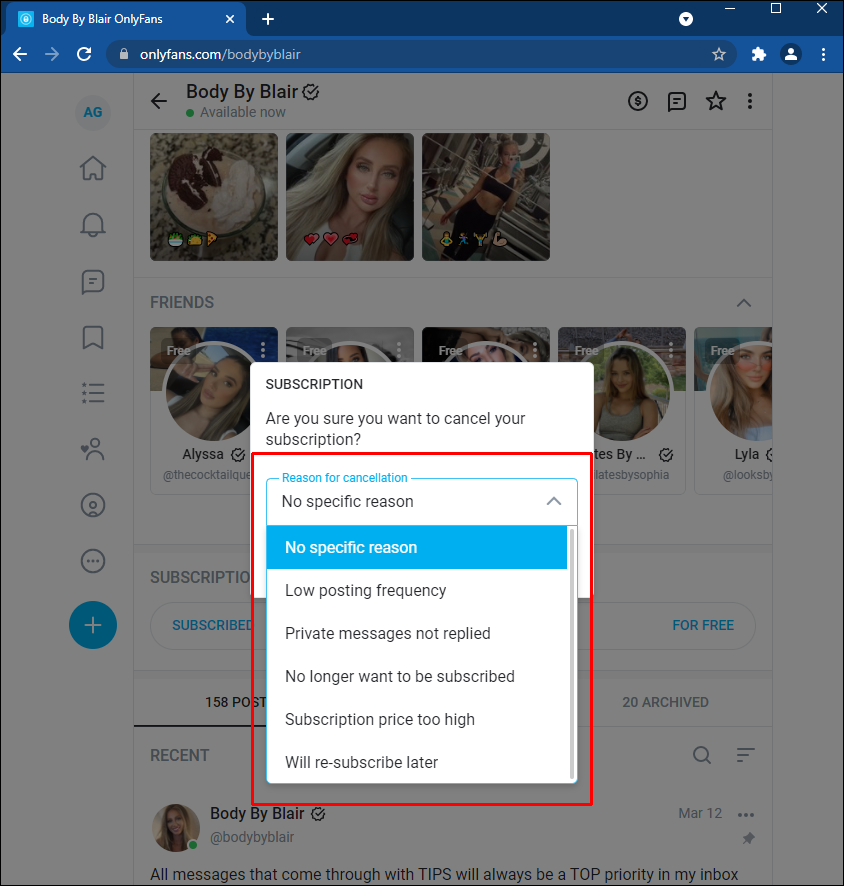
Timing matters as much as the error itself. When a creator raises the price, auto-renew stops automatically, and your existing access lasts until the paid period ends. That rule is useful, but it also means a renewal that lands just before you notice a price change can look like an error when it was technically valid.
Three calendar thresholds decide most edge cases. Cancelling within 24 hours before a renewal often lands after the charge has already been submitted. A mid-cycle price increase has a notification window attached to it. And after a renewal posts, roughly the first 48 hours are when a partial proration request has the best chance.
- 24 hours before renewal: cancel earlier than this or the charge may already be in flight.
- Mid-cycle price increase window: the notification period determines whether the new rate was properly disclosed.
- Post-renewal 48-hour grace period: the strongest window for requesting partial credit.
Partial credit is not the same as a full refund. If you used several days of a billing period before reporting the error, expect any adjustment to reflect the unused portion only. Understanding that math before you file keeps your expectations aligned with what support can actually authorize.
Wallet Credit Refunds vs. Original Payment Returns
When a refund is approved, you may be offered wallet credit instead of a return to your card. Wallet credit appears almost immediately and can be spent on new subscriptions, PPV messages, or tips. The trade-off is obvious: the money stays inside the platform and cannot pay your rent.
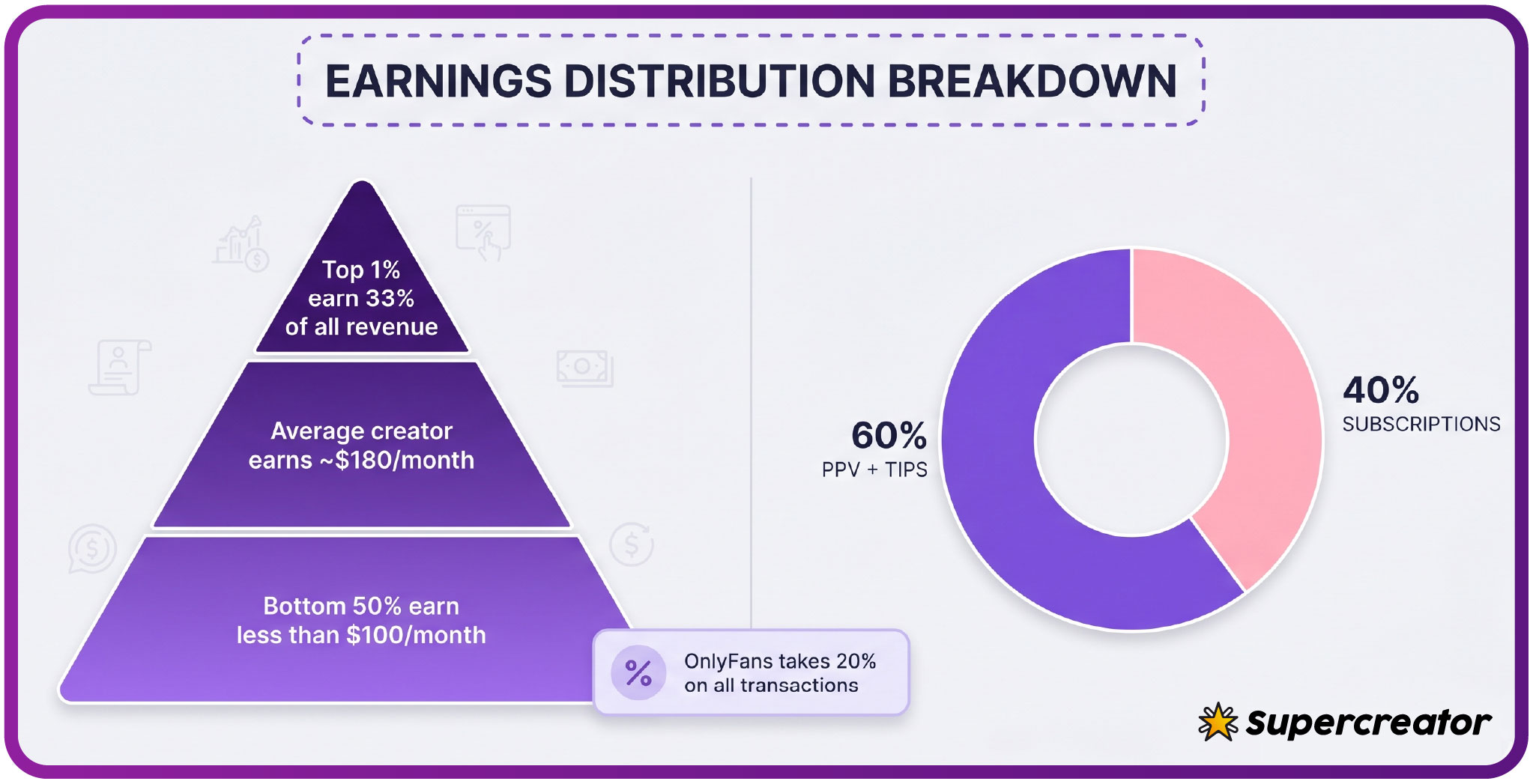
A return to the original payment method is slower but unrestricted. Expect five to ten business days after approval, sometimes longer depending on your bank. The 20% platform fee also shapes what creators can adjust on their side, since they only ever received 80% of what you paid.
| Refund Method | Speed | Usability | Fee Impact | When Recommended |
|---|---|---|---|---|
| Wallet credit | Near-instant after approval | Locked to platform spending | Full amount credited | You plan to keep subscribing |
| Original payment return | 5-10 business days after approval | Unrestricted cash | Full amount returned | You want the money back in your account |
For small amounts, wallet credit is often the pragmatic choice because the delay of a card return outweighs the benefit of unrestricted cash. For anything larger, insist on the original payment path and accept the wait.
Steps to Protect Subscription Access During Disputes
An aggressive chargeback can put your account under review, and a limited account cannot access pages you are still paying for elsewhere. The goal is to fix the billing error without collateral damage to unrelated subscriptions. Sequence matters here more than speed.
- Contact the creator first and describe the billing problem in plain terms.
- Submit a platform support ticket before filing any chargeback.
- Ask for a temporary access hold rather than an immediate reversal where possible.
- Escalate to your card issuer only after roughly 14 days of platform non-response.
That 14-day buffer is not arbitrary. It matches the upper end of the manual review window, so you are giving the platform a fair chance before involving the card network. Document everything as you go, because a dispute with no paper trail is a dispute you usually lose.
Warning: filing a chargeback while a platform ticket is still open can freeze both processes. Cancel one before starting the other, or you may wait twice as long for a worse outcome.
Account security practices overlap with billing protection more than people expect. Two-factor authentication settings on your account reduce the chance that an unauthorized charge appears in the first place.

Documenting Your Case for Faster Resolution
Cases with clean documentation move through review tiers faster because nobody has to ask follow-up questions. Support agents work from evidence, and a vague complaint about a wrong charge forces them to reconstruct your history from scratch. Give them the timeline instead.
Save five things before you file anything. Together they cover the charge, the transaction, the failure, the page, and the error itself. A case built on these five items rarely needs a second round of correspondence.
- Bank statement entry showing the exact charge descriptor.
- OnlyFans transaction ID from your wallet history.
- Timestamped screenshot of the failed content access.
- Creator page URL as it appeared at the time of purchase.
- Any platform error messages you received.
This documentation approach is the same method BestOnlyFans uses when comparing platform tools: verify the transaction, verify the outcome, then compare. Applied to a billing dispute, it turns a subjective complaint into a chronological record that is hard to dispute.
FAQ
How long should I wait before escalating to my card issuer?
Give the platform about 14 days from your first ticket. That covers the manual review window for PPV disputes and technical failures. Escalating earlier risks a double process, where the platform and the issuer are both investigating the same charge.
Will requesting a refund cancel my active subscription immediately?
Not automatically. A refund request and a subscription cancellation are separate actions. If you want the subscription to end, cancel it explicitly, and remember that access continues until the current paid period finishes.
Does OnlyFans refund the platform fee portion or just creator share?
Refunds are handled against the amount you paid, not against the creator’s 80% share. The 20% platform fee is part of the transaction you are disputing, so a full refund addresses the full charge rather than only the creator portion.
Can I dispute a charge while maintaining access to other subscriptions?
Usually yes, but account-level reviews can interrupt access across the board. Platform support tickets carry lower risk than chargebacks. If you must escalate to your issuer, expect a possible temporary limit while the dispute is open.

![Windows-Hello-For-Business-Active-Directory[1]](https://maciejrebisz.com/wp-content/uploads/2025/08/Windows-Hello-For-Business-Active-Directory1-1024x576-65x65.png "Windows-Hello-For-Business-Active-Directory[1]")
![B-Intune-Graphic[1]](https://maciejrebisz.com/wp-content/uploads/2025/08/B-Intune-Graphic1-1024x603-65x65.png "B-Intune-Graphic[1]")